Digital Health
Headphones for Kids: Safer Listening Habits and Volume Checks
There is no volume-slider percentage or “kid-safe” label that guarantees safe listening for every child. Check how loud the sound is, how long the child listens, and what happens in the actual device-and-headphone combination. A quieter setting is a starting point, not permission to listen indefinitely.
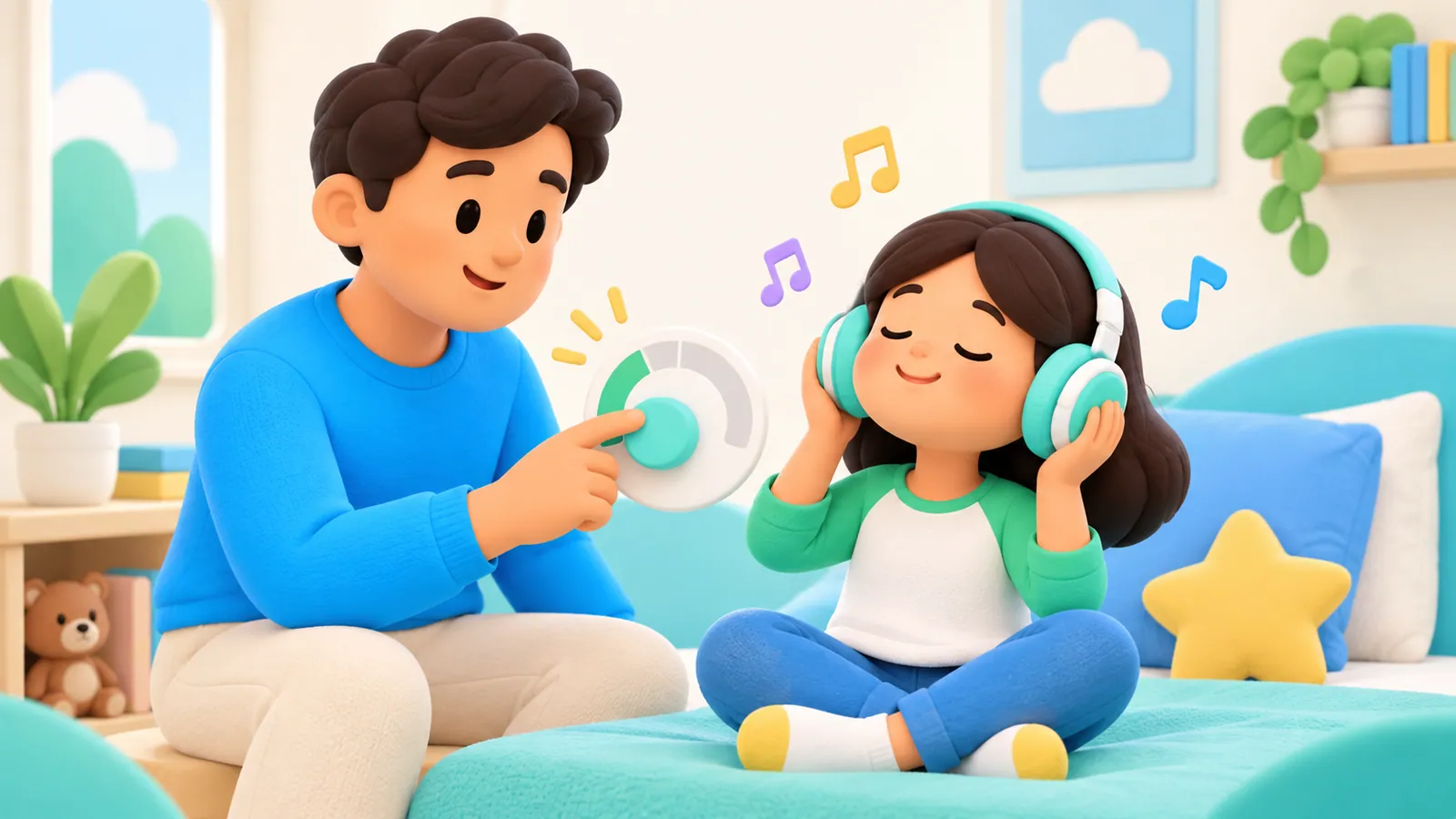
There is no volume-slider percentage or “kid-safe” label that guarantees safe listening for every child. Check how loud the sound is, how long the child listens, and what happens in the actual device-and-headphone combination. A quieter setting is a starting point, not permission to listen indefinitely.
For everyday use, set the volume low before playback, use the available parental loudness controls, and build in quiet time. If your child reports ringing, muffled sound, pain, or difficulty hearing, stop treating the question as a shopping decision and ask a health professional.
The National Institute on Deafness and Other Communication Disorders explains that hearing risk depends on both loudness and duration. Harm can follow a very loud event or repeated exposure over time. NIDCD guidance.
Why the numbers can be confusing
A device's volume percentage tells you where the slider sits. It does not, by itself, tell you the sound exposure at the child's ears.
You may see different practical recommendations. AAP and ASHA parent guidance suggests half volume or less, while WHO's safe-listening guidance uses below 60% as a general rule. Neither percentage turns every combination of phone, recording, connection, and headphones into the same measured sound level. AAP/ASHA guidance, WHO safe-listening guidance.
Similarly, a package marked 75 or 85 decibels gives you something to investigate, not a complete listening plan. The AAP cautions that products marketed for children can still be too loud. NIDCD warns that prolonged or repeated exposure at or above 85 dBA can cause hearing loss. Do not read that number as an unlimited child-safe target.
When a child's hearing needs are already being managed by an audiologist, ask for advice tailored to the child and equipment rather than choosing a threshold from a general article.
Check the whole listening setup
Use this checklist when setting up headphones, changing devices, or handing over equipment that belonged to an adult. It is a practical equipment review, not a hearing test.
| Check | What you are trying to establish |
|---|---|
| Device and connection | Which phone, tablet, computer, or console is supplying the sound? |
| Listening mode | Are the headphones wired or wireless, and does the stated limiter apply in that mode? |
| Available controls | Can an adult set a loudness limit, and does it remain in place after reconnecting? |
| Content | Is the child listening to a lesson, a game, music, or voice chat with separate controls? |
| Fit | Are the headphones comfortable, appropriately sized, and staying in place? |
| Environment | Is outside noise encouraging the child to raise the volume? |
| Duration | Where are the actual pauses between listening activities? |
Read the manufacturer's instructions for the model. Do not assume a label on the box explains every mode. If you cannot determine how a limiter behaves, ask the manufacturer before relying on it.
Begin playback at a low setting. Check another ordinary recording before declaring the setup finished. A game with separate music, effects, and voice-chat settings may need more than one adjustment. Keep this a listening review, not an experiment in finding the loudest tolerable sound.
Make the quieter choice easier
WHO recommends well-fitting headphones and, where appropriate, noise cancellation to reduce the urge to overcome background noise with more volume. It also suggests speakers for children's online classes where practical. WHO guidance for children and headphone users.
That does not mean noise cancellation is required or that headphones are always the wrong choice. A shared room may make speakers disruptive. A child may use particular equipment as an accommodation. Work with the school or care team when listening equipment serves a specific need.
Look for an environmental problem first. Can the child move away from the television? Can two people avoid competing audio in the same room? If a room is too noisy for comfortable listening, increasing the volume is not the only option.
Do not use whether you can hear sound leaking from the headphones as a reliable measurement. A quiet room, a better fit, and appropriate settings are more useful than arguing about who can hear what from across the room.
Count the next activity too
A listening break should involve less sound. Switching from loud music to a loud game does not accomplish that.
Help the child see the day's sequence: a school lesson, music during travel, a game with friends, then more videos. Each activity may have a different purpose, but the ears experience the sound across the day.
Choose a natural quiet interval. The child might remove the headphones to get materials ready, eat, read, draw, or talk in a comfortable environment. Do not replace one exposure with a television turned up in the background.
Avoid making the child earn quiet time or finish an uncomfortable session. The ability to say “this is too loud” should be part of using the equipment.
Teach a simple response to discomfort
Tell the child that ringing or muffled hearing is worth mentioning even if it goes away. They will not be in trouble for reporting it.
Ask about the experience: when it happened, which activity was involved, and whether hearing still feels different. Do not try to diagnose the cause by raising the volume or comparing ears at home.
WHO advises professional assessment for persistent ringing or difficulty following conversations, and NIDCD recommends a hearing test when hearing loss is suspected. WHO warning signs, NIDCD information.
The next useful step is usually to check the equipment you already own and the routine around it. A parental-control app for entertainment access is not a substitute for listening controls or a hearing assessment.
Sources
We identify organizations and evidence types so readers can evaluate each claim. See our editorial policy.
- Deafness and hearing loss: Safe listening — World Health Organization.
- Noise-Induced Hearing Loss (NIHL) | NIDCD — nidcd.nih.gov.
- Tips to Preserve Your Child’s Hearing During the Holidays - HealthyChildren.org — American Academy of Pediatrics.