Digital Wellbeing
My Child Saw a Disturbing Video: What to Do Next
First, help your child step away from the video and feel able to talk with you. Ask what they saw and what is worrying them without requiring a replay or a detailed description. The first conversation is about the child; changing settings can come afterward.
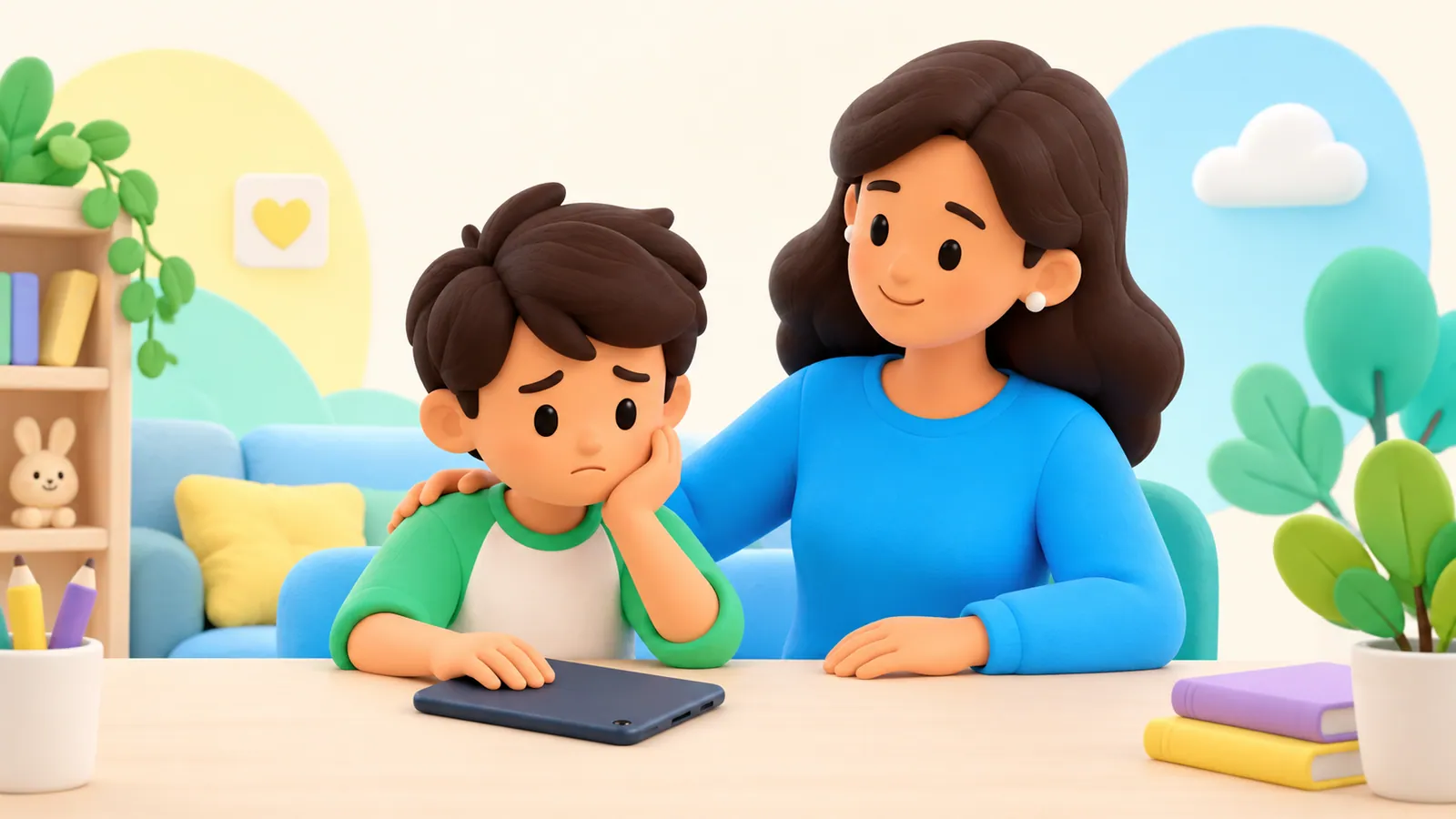
First, help your child step away from the video and feel able to talk with you. Ask what they saw and what is worrying them without requiring a replay or a detailed description. The first conversation is about the child; changing settings can come afterward.
A frightening video might have appeared unexpectedly, arrived from a friend, or been something the child deliberately clicked. You can address those circumstances without making disclosure feel like a mistake. “I'm glad you told me” is a useful place to begin.
This guide concerns a supportive response, not a diagnosis of trauma. If the content involves a direct threat, ongoing unsafe contact, or immediate danger, act on that safety problem rather than treating it as an ordinary upsetting viewing experience.
Stop the exposure without demanding an explanation
Pause or close the content. Move attention away from it and stay available. If the child is very upset, a long investigation into which button they tapped can wait.
Try a brief, original script: “You don't have to keep watching. We can put this down. Tell me what feels scary when you're ready.”
Do not insist on seeing the video again with the child so you can judge whether it was “really that bad.” An adult may need to inspect the source later, separately and only as much as necessary. The child does not need to take part in repeated viewing.
AAP guidance on frightening news recommends finding out what children already know, answering their questions clearly, and avoiding graphic detail and repetitive exposure. Adapt the amount of information to the child's understanding. AAP guidance for difficult news conversations.
Find the question underneath the fear
A child may be wondering whether the event was real, whether it could happen nearby, whether they caused something by clicking, or whether they will be punished for telling you.
Ask one question at a time. “What are you worried will happen?” may tell you more than a demand to recount the whole clip.
Be honest about what you know. You can say, “I haven't checked whether that claim is true,” or “That was made to look frightening.” Do not promise that nothing bad could ever happen. Offer reassurance about the immediate situation that you can actually support.
With a younger child, use short explanations and familiar words. With an older child, allow room for questions and uncertainty. Age is only one guide; communication and developmental needs matter too.
Keep the conversation separate from consequences
There may be a rule to revisit, but begin by thanking the child for getting help. If every disclosure automatically leads to losing all communication with friends, the child may have a reason to avoid the next conversation.
You can hold a boundary and keep the relationship open: “We need to change how this app is being used. You were still right to tell me what happened.”
Avoid labels such as weak, dramatic, or addicted. A child who laughs while describing the clip may still be unsure what to make of it. Ask rather than assuming you know how they feel.
The following responses are illustrative options, not a counseling protocol:
| If the child says… | A possible response |
|---|---|
| “I shouldn't have clicked.” | “We can work out what happened. Getting help was a good choice.” |
| “I keep thinking about it.” | “I'm here. You can tell me when it comes back into your mind.” |
| “My friend says everyone watches it.” | “Other people watching doesn't decide what is right for you.” |
| “Will I get in trouble?” | “First I want to understand and help. Then we can discuss the app.” |
Check how the video reached them
Later, review the route without asking the child to search for more disturbing material. Was it an autoplay recommendation, a direct message, a shared screen, a search result, or a preview image?
That distinction matters. A time limit does not solve unwanted messages. Blocking one video does not necessarily address the account recommending similar material. A browser route may need attention separately from an app.
Use the service's reporting, blocking, age, and supervision options as appropriate. Read the current official instructions for the account and device involved. Do not promise that a filter will prevent every upsetting image.
The AAP specifically notes that frightening content can appear in recommendations and thumbnails and advises checking the experience with the child. It also cautions that filters are imperfect. AAP guidance on scary online content.
If the route was a social account, our TikTok Family Pairing guide or Instagram supervision guide can help you review what those tools actually cover.
Follow up when the moment has passed
A single conversation may not answer every question. Check in later without bringing back graphic details: “How are you feeling about what you saw?”
Offer ordinary company or a familiar activity the child likes. They do not have to produce a perfect explanation before you can sit together. Let them know which adult they can contact if it happens away from home.
Watch for changes that concern you, such as persistent difficulty sleeping, distress, or problems joining usual activities. These do not establish that the video caused a disorder. They are reasons to ask the pediatrician or an appropriate mental-health professional for help.
NIMH recommends seeking support when emotional or behavioral difficulties persist, cause distress, or interfere with daily functioning. Unsafe behavior or talk of harming oneself or others requires immediate help. In the United States, call or text 988 for suicide or mental-health crisis support; call 911 for life-threatening danger. NIMH guidance.
For a nonurgent appointment, our pediatrician conversation guide can help organize what happened and what has changed. The most useful outcome today is that your child knows they can stop, find you, and be heard.
Sources
We identify organizations and evidence types so readers can evaluate each claim. See our editorial policy.
- How to Talk With Kids About Tragedies & Other Traumatic News Events - HealthyChildren.org — American Academy of Pediatrics.
- My 11-year-old loves to watch horror videos and true-crime serial killer shows on YouTube. Should I be concerned? - HealthyChildren.org — American Academy of Pediatrics.
- Children and Mental Health: Is This Just a Stage? - National Institute of Mental Health (NIMH) — nimh.nih.gov.