Digital Wellbeing
Screens at Mealtimes: How to Change the Routine Without a Standoff
If a screen has become part of every meal, change one predictable part of the routine before trying to change every meal at once. Explain the plan before food arrives, include the adults, and keep eating separate from rewards for finishing a video or taking another bite.
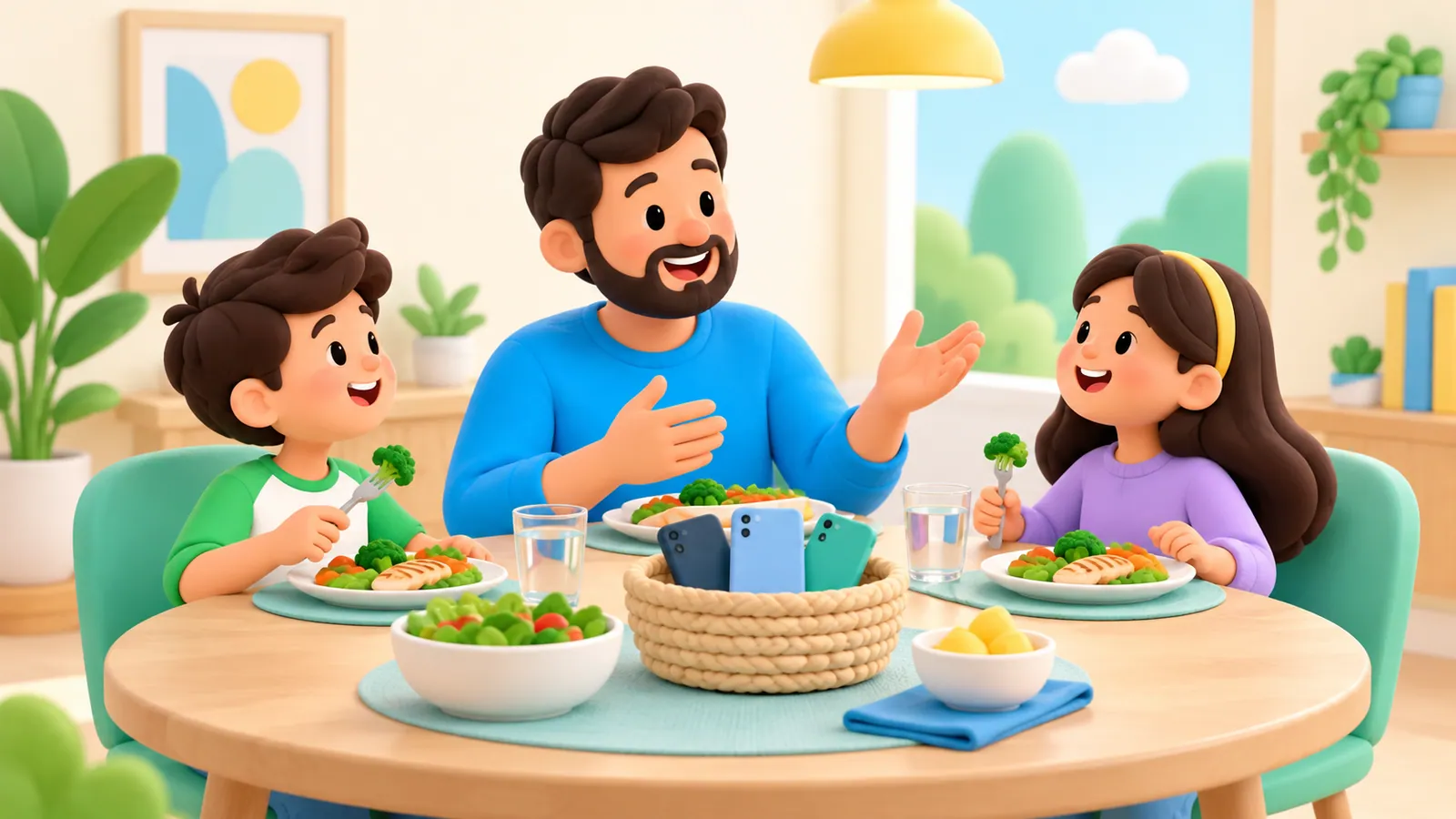
If a screen has become part of every meal, change one predictable part of the routine before trying to change every meal at once. Explain the plan before food arrives, include the adults, and keep eating separate from rewards for finishing a video or taking another bite.
There is an important exception: if your child has feeding difficulties or a clinician has helped design a specific mealtime arrangement, discuss changes with that professional. A general screen-free goal should not replace an individualized feeding plan.
For infants and toddlers aged 6–24 months, CDC guidance recommends reducing distractions at meals, facing the child toward family members, and responding to how much the child wants to eat. That advice is about the eating environment, not a promise that turning off a screen will solve feeding concerns. CDC mealtime guidance.
Find out what the screen is doing
The screen may be buying time while food is prepared, keeping siblings from arguing, helping an adult manage a restaurant wait, or occupying a child during a work call. Those are different situations.
Ask yourself when the device first appears. Before the meal? Only when the child stops eating? Throughout the whole family dinner? The answer helps you choose a change that addresses the actual routine.
Also distinguish entertainment from a device used for communication or accessibility. A child's communication tool can belong at the table even when videos do not. “No screens” is too blunt if it removes the way a child participates.
Write one sentence describing the issue without blame: “We keep restarting videos because dinner begins before the food is ready.” That points toward a different solution from “Our child cannot behave without a tablet.”
Choose the easiest meal to practice
Do not start with the most rushed evening, the longest restaurant visit, or a meal at which everyone is already upset.
Choose a meal when at least one adult can be present and the child is not expected to sit waiting for a long time. Make the physical arrangement simple: food ready, a suitable seat, and adults' devices put away or their necessary use explained.
Tell the child what will happen in plain language. For example: “At breakfast, the tablet will stay on the shelf. We can talk while we eat, and you can tell me when you're finished.”
That is an illustrative script, not a formula. Adjust the words to the child's age and communication needs. An older child can help choose the first meal and explain what would make it manageable.
A gradual example
Consider a fictional family whose preschooler watches videos before and during dinner. They decide to change the start of the meal first.
| Part of the routine | Their proposed change | What they review |
|---|---|---|
| Waiting for food | The tablet is not brought to the table before dinner is ready | Whether the child spends less time waiting |
| Starting the meal | A clear goodbye to the show happens before sitting down | Whether the transition is understandable |
| Eating | One adult joins the child without scrolling | Whether the adult can realistically maintain this |
| Finishing | Food is not used to bargain for another episode | Whether the family avoids repeated bite-for-screen negotiations |
| Afterward | The next activity is stated in advance | Whether dinner ends without starting a new argument |
Another family might begin with a snack or weekend breakfast. There is no required number of screen-free minutes and no universal sequence that every child must complete.
A gradual plan also does not mean turning the video on and off after each bite. Keep the media rule and the feeding interaction separate.
Expect some disagreement without making hunger a contest
A child may object to a familiar routine changing. Acknowledge the preference and restate the plan briefly: “You wanted the show. It's staying off during this meal.”
You do not need to argue that the child should enjoy conversation or prove gratitude for the food. Nor does every meal have to become a guided discussion. Quiet company is still company.
Avoid requiring the child to finish the plate to make the experiment count as a success. CDC's infant and toddler guidance specifically says children do not have to finish everything and encourages attention to hunger and fullness. If you are worried about how much the child eats, speak with their health professional. CDC guidance on amount.
If a change repeatedly creates distress or conflicts with a feeding plan, step back and get appropriate advice. A household rule can be revised without turning the child into the problem.
Bring the other adults into the agreement
A child may eat with parents, relatives, child care staff, or a sitter. Share the specific rule, including its reason and exceptions.
“The tablet stays away at breakfast” is easier to follow than “We're doing less screen time.” Explain whether a phone is sometimes needed for work, translation, medical information, or a family call. Necessary use should be visible rather than quietly disguised as a universal rule that only children follow.
The AAP's Family Media Plan encourages rules for all household members and revisiting them as circumstances change. Use our family media plan guide if adults need a place to record the agreement.
Handle meals away from home separately
A long wait at a restaurant is not the same setting as an ordinary breakfast. Decide in advance what the child can do while waiting and what happens when food arrives.
Possible options include looking at the menu together, bringing a small familiar activity, or arranging the visit around what the family can manage. None is a guarantee. If entertainment is used as an exception, name the exception instead of pretending the ordinary rule has disappeared.
When reviewing the change, ask whether the meal became more manageable and whether the arrangement respected the child's needs. Do not judge it by how impressive it looked to other diners. The useful result is a meal routine your own family can understand and repeat.
Sources
We identify organizations and evidence types so readers can evaluate each claim. See our editorial policy.
- Tips for Mealtime Routines — cdc.gov.
- How to Make a Family Media Plan - HealthyChildren.org — American Academy of Pediatrics.