Digital Wellbeing
Using a Phone to Calm a Child: Building More Than One Option
Giving a child a phone during a difficult moment does not tell you that you have harmed them. The practical question is whether it has become the only available response—and whether your family would benefit from other options for particular situations.
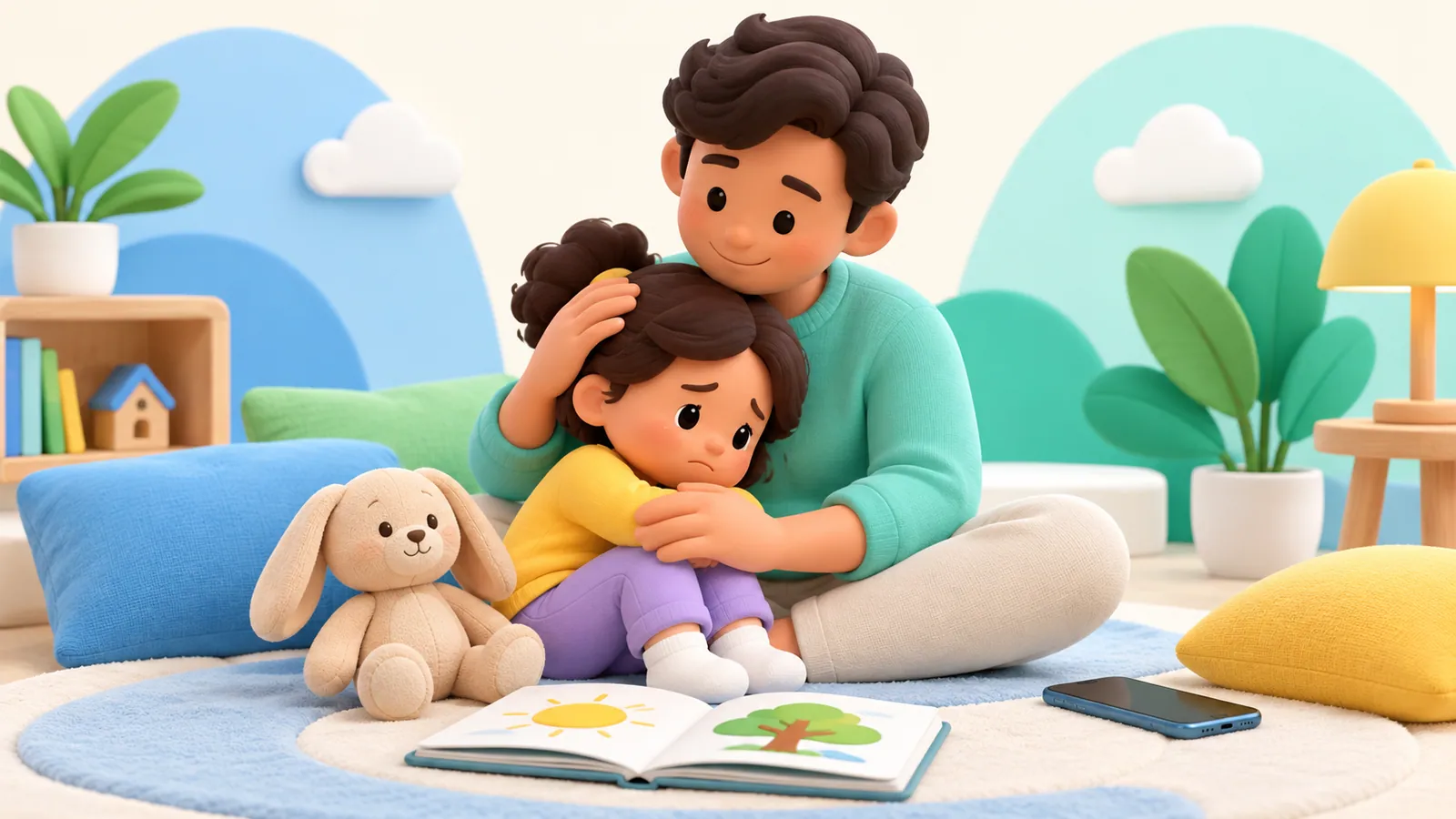
Giving a child a phone during a difficult moment does not tell you that you have harmed them. The practical question is whether it has become the only available response—and whether your family would benefit from other options for particular situations.
Start with one predictable moment, such as waiting for a sibling or moving through a difficult part of the day. Understand what the phone provides there before trying to remove it. A plan that ignores hunger, fatigue, a hard task, or an adult's limited availability may simply create another struggle.
This is a guide to ordinary family habits, not a treatment for emotional or developmental difficulties.
What the research can say
A prospective study of 422 children aged 3–5 examined parents' reports of using devices for calming and children's emotional reactivity over six months. Some associations differed by child sex and temperament. Because this was an observational convenience sample using parent reports, it cannot prove that a particular phone handoff caused a child's difficulties. Radesky and colleagues, 2023.
The AAP's current media policy recommends helping families identify calming uses of media and develop other strategies. That is a reason to build options, not to promise that removing screens will produce instant self-regulation. AAP recommendations for pediatric providers.
Neither source tests OMO as a way to improve emotion regulation. Educational tasks before entertainment access should not be presented as a treatment for a child's distress.
Identify the moment you are trying to change
Think about the last few times you handed over the phone. Were they actually the same situation?
A child waiting quietly during an unusually long appointment is different from a child who wants support after an upsetting encounter. An exhausted parent getting through a disrupted day has different resources from an adult planning a calm weekend outing.
Write a description with the circumstances included: “The phone comes out while we wait outside the older child's activity,” rather than “We use screens too much.”
Then ask what the child gains from it. It may occupy attention, offer familiar sound, connect them to someone, or make an unpredictable wait feel more familiar. Those are possibilities to explore, not diagnoses.
Match an option to the situation
The following map offers editorial examples. None is guaranteed to calm every child, and the child's preferences and abilities should shape the choice.
| Situation | What to understand | An option to prepare |
|---|---|---|
| Waiting with no clear endpoint | Does the child know what they are waiting for? | A simple explanation, a familiar activity, and updates from the adult |
| Frustration with a task | Is help or a different way of doing it needed? | Help with one part, or a brief pause with a stated return |
| Wanting contact | Is the child asking for someone's attention? | A realistic moment together or contact with a trusted person |
| A noisy or demanding setting | What part feels uncomfortable? | A quieter place if available and the child's familiar comfort routine |
| An adult who is temporarily unavailable | What is manageable and safe right now? | A prepared activity the child can use with appropriate supervision |
Avoid assembling a complicated “calm kit” that nobody has time to carry. One familiar item in the place it is needed may be more useful than an elaborate collection at home.
For a child with an individualized support plan, use the strategies recommended by the people who know their needs. A general article should not replace them.
Practice the alternative when the stakes are low
Do not wait for the hardest moment to introduce something completely new. Show the child the plan when they are comfortable enough to notice it.
An illustrative conversation might be: “While we wait for your sister, we can look at this picture book together. I'll tell you when the class is finishing.” On another day, the workable option may be drawing, talking, or watching an activity nearby.
Notice whether the option addresses the actual difficulty. If the child is upset because the wait keeps changing, more toys may not answer that problem. Clear updates may be the missing part.
You are allowed to discover that an option does not help. That is information about the situation, not evidence that the child has failed.
If you still choose a screen, make the choice clear
A family can choose a screen for a particular moment without calling it the only way the child can cope.
Pick the activity and explain the endpoint. Avoid opening an endless feed when you already know leaving it is difficult. Think about what happens next and how much help the child will need.
An exception should not quietly become a bargain after every escalation. At the same time, changing a habit does not require refusing all comfort or insisting that a child manage distress alone.
If the main problem happens when entertainment is already ending, our guide to parental controls without conflict addresses that different situation. The focus here is what happens before the phone is offered for calming.
Include what the adult needs
A parent may reach for a phone because there is no second adult, no safe place to play, or an urgent task. An honest plan includes those constraints.
Choose something you can repeat on a normal difficult day. Perhaps you can prepare the waiting activity in advance. Perhaps another adult can take one part of the routine. Perhaps the first useful step is simply noticing when you are offering the device automatically.
Do not compare your hardest moment with somebody else's edited family routine. The aim is to expand what is possible, not eliminate every use of technology.
Know when the question is bigger than a habit
If distress is persistent, severe, or affects the child's ordinary life, speak with the pediatrician or an appropriate mental-health professional. Describe the situations and what helps, including successful moments. Do not diagnose a problem from the fact that a phone can capture the child's attention.
NIMH advises seeking help for ongoing emotions or behaviors that cause distress or interfere with functioning. Unsafe behavior or talk of harming oneself or others needs immediate support. NIMH guidance.
Use our pediatrician preparation guide if you need help organizing the conversation. For an ordinary routine change, choose one recurring situation and one realistic alternative. The goal is to give the child—and the adult—more than one way through it.
Sources
We identify organizations and evidence types so readers can evaluate each claim. See our editorial policy.
- Digital Ecosystems, Children, and Adolescents: Policy Statement — publications.aap.org.
- Children and Mental Health: Is This Just a Stage? - National Institute of Mental Health (NIMH) — nimh.nih.gov.
- Longitudinal Associations Between Use of Mobile Devices for Calming and Emotional Reactivity and Executive Functioning in Children Aged 3 to 5 Years — PubMed.