Family Routines
Homework Before Screen Time: A Practical After-School Routine
Build an after-school routine with rest, realistic homework expectations, entertainment boundaries, and access for schoolwork on a device.
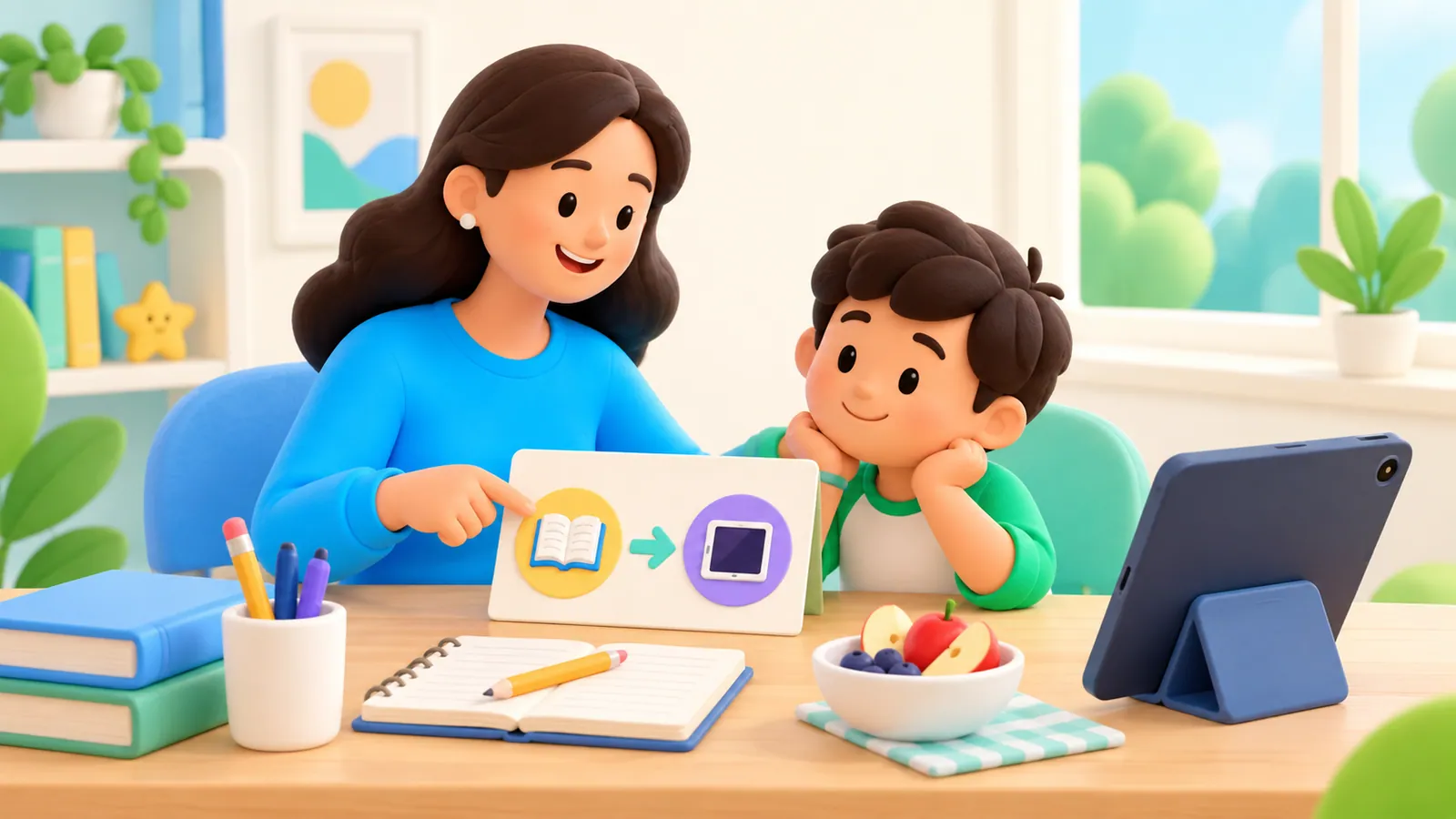
“Homework before screen time” can be a useful household shorthand, but it leaves several questions unanswered. Does a tired child get a break first? What if the homework is on an iPad? What happens when an assignment takes much longer than expected?
Build the routine around the actual afternoon. There is no single sequence that fits every age, workload, disability, caregiving arrangement, or school day.
Separate three kinds of device use
Before setting a rule, identify what the child needs to do on the device.
| Type of use | What to decide |
|---|---|
| Schoolwork | Which assignment, app, website, or file is needed, and what counts as a stopping point? |
| Entertainment | When may the activity begin, and when must it end? |
| Communication or accessibility | What needs to remain available, and to whom? |
A school assignment does not become entertainment because it uses the same iPad as a game. Conversely, opening a homework app does not make every other activity on the device part of schoolwork.
The AAP's updated guidance recognizes that digital life includes education and other necessary activities, and asks families to consider context as well as time. AAP policy explained.
Leave room to arrive home
Start by looking at the transition from school. Your child may need food, a conversation, movement, quiet, or simply a pause before another demand.
You can choose an off-screen break first without declaring that every child must follow the same schedule. You can also decide that a brief entertainment window works better for your family, provided its end is clear and it leaves room for what follows.
Ask: “What would help you get ready to start?” Then offer choices you can actually support. A routine that depends on an adult supervising every minute may not fit a working household.
Two illustrative afternoons
These examples are planning options, not recommended time limits or schedules for particular ages.
Example A: a short assignment and an available adult. After arriving home, the child has a snack and some unstructured time. They check the assignment with the adult, complete it, and put the materials away. A pre-agreed entertainment window follows before dinner. The family chooses its duration and stopping time in advance.
Example B: a late activity and a longer assignment. The child checks what is due before leaving for practice. After returning, they eat and rest, then work on one agreed part of the assignment. The adult helps decide whether more work is reasonable that evening. Entertainment may fit elsewhere in the week rather than being squeezed into bedtime.
Neither example makes unfinished work a reason to keep a child working indefinitely.
Define “homework is done” before it becomes an argument
Check the teacher's instructions together when necessary. Does the assignment ask for a completed page, a period of reading, a draft, or practice that is expected to be imperfect?
Avoid replacing the teacher's task with “everything must be correct.” If a child is stuck, note the question and what they tried. Depending on the situation, the next step may be asking for help, contacting the teacher, or returning to the task later.
Set an adult check-in point for unexpectedly long work. This does not guarantee a child will stop or continue; it gives the family a moment to reassess instead of allowing the evening to run on without a decision.
Make necessary device access specific
If homework needs YouTube, a browser, or a learning platform, identify the actual resource before restricting access. Keep entertainment controls separate where the available settings allow it.
Check the setup on the child's device. An app limit may affect a legitimate assignment, while a website may remain reachable through another route. Do not assume that the name of a category perfectly separates school from recreation.
Tell your child how to report a mistaken restriction: “Show me the assignment and what won't open.” That is more useful than making them prove they deserve the entire device back.
Plan the end of entertainment too
Completing homework answers when entertainment may start. It does not answer when it ends.
Choose a stopping time or cue before the session begins. If a game has long rounds or a video leads straight into another, discuss how the child will finish the selected activity within the available window.
Keep optional extra learning separate from the homework rule. A child who has completed the agreed school task should not suddenly discover a second requirement. If your family chooses learning before gaming, make that a visible decision rather than an added condition.
Give unusual days a rule of their own
Illness, travel, exams, family events, or a changed pickup time may require a different afternoon. Name who can approve an exception and when the normal routine resumes.
After trying the plan, review the difficult point: arriving home, starting work, staying on the assignment, or ending entertainment. Change the relevant part instead of rewriting every rule.
The AAP recommends revisiting family media plans as circumstances change. Family media plan guidance. Use our fillable family plan to record the routine, exceptions, and next review date.
Sources
We identify organizations and evidence types so readers can evaluate each claim. See our editorial policy.
- Helping Kids Thrive in a Digital World: AAP Policy Explained - HealthyChildren.org — American Academy of Pediatrics.
- How to Make a Family Media Plan - HealthyChildren.org — American Academy of Pediatrics.