Family Rules
Your School Changed Its Phone Policy: A Family Preparation Checklist
Prepare for a school phone policy by checking storage, contact, travel, and approved exceptions. Includes school questions and a practical home rehearsal.
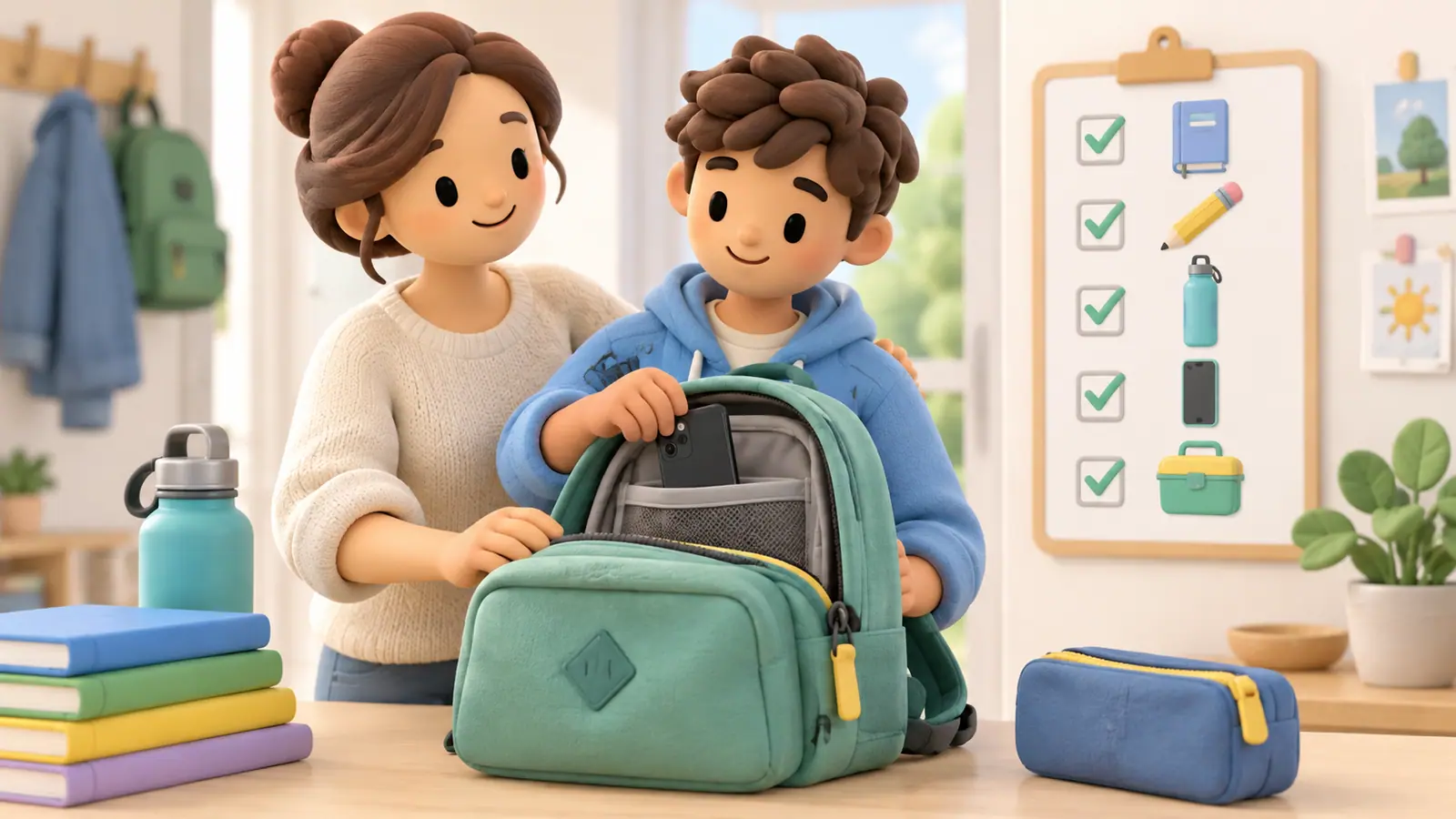
When a school changes its phone policy, read the school's actual notice before changing the family setup. Find out when the rule applies, where devices stay, and how essential contact works. A news headline about a regional phone ban may not explain your child's daily procedure.
This checklist is for planning with the school. It does not interpret local law or establish which exceptions a particular school must provide.
Clarify the scope
Ask whether the policy covers lessons only or the whole school day. Check arrival, dismissal, lunch, field trips, and after-school activities. Also ask which devices are included: phones, watches, tablets, or other connected equipment.
The difference matters. A child may need one arrangement for the bus journey and another after entering the building.
Ask six practical questions
- Where should the device be stored, and who is responsible for it?
- What happens if a child accidentally brings it into a restricted area?
- How should parents send an urgent message during the day?
- How does the school contact families if plans change?
- How are health, disability, accessibility, or other approved needs handled?
- Who can answer a question about the policy before the first affected day?
If your child has an existing support plan, discuss the device's actual function with the appropriate school staff. Do not assume a general announcement silently changes that arrangement.
Separate travel from classroom use
Write the journey plan: when the child checks transport information, how they contact you after dismissal, and what they do if a ride changes. Keep a backup route in case the phone is unavailable or its battery is flat.
For a younger child, practice the route with an adult. For a teen, ask them to explain the plan back in their own words. The aim is practical readiness, not memorizing a policy document.
Rehearse at home
Have the child demonstrate the storage step using the actual bag or container where appropriate. Check whether an alarm, notification, or connected watch could still make noise and follow the school's instructions for silencing or switching off devices.
Do not install bypass tools or conceal a second device to work around the rule. If the policy creates a real access problem, raise that problem with the school directly.
Update the parent's habits too
Stop sending messages that require an immediate reply during a period when the child is not supposed to check the phone. Use the school's designated contact route for urgent matters.
Explain to relatives or other caregivers how pickup changes will be communicated. A workable policy depends partly on adults following the same communication plan.
Review the first few days
Ask what was easy and what caused confusion. Was the storage procedure clear? Did the child know whom to approach? Were transport details available when needed?
Bring specific problems to the school: “The after-school club changed pickup time after devices were stored” is more actionable than “This policy does not work.”
If you adjust home restrictions, test necessary access using our school apps and family contacts guide. Record the school's contact route and the family's travel arrangement in the family media plan.
Sources
We identify organizations and evidence types so readers can evaluate each claim. See our editorial policy.
- school apps and family contacts guide — OMO Kids Editorial Team. Editorial guide.
- family media plan — OMO Kids Editorial Team. Editorial guide.