Learning
An Offline Learning Kit for Kids: Five Activities That Need No Login
Prepare a small offline learning kit with reading, number, map, and writing activities. Includes materials, examples, and an easy way to choose one task.
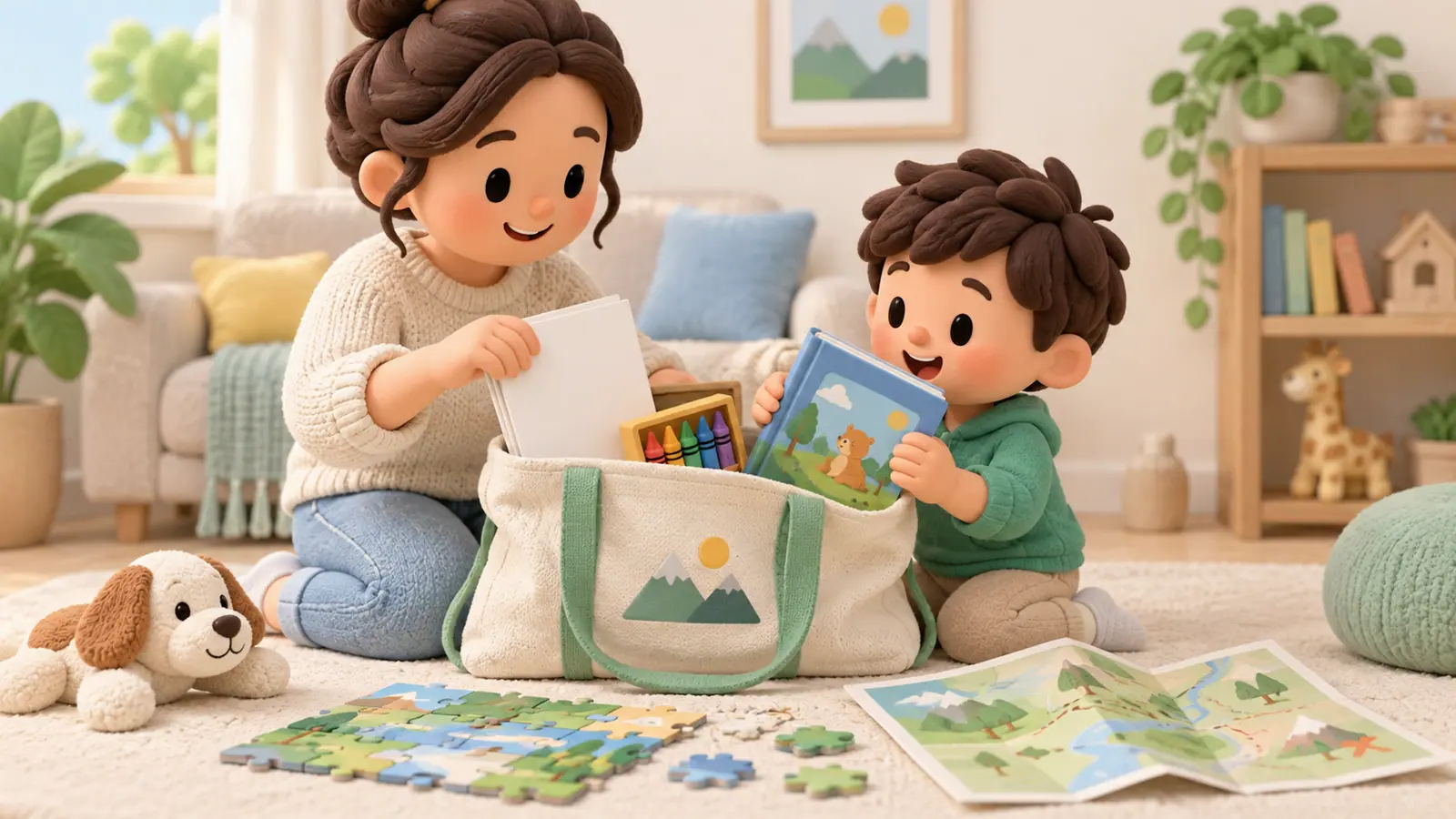
An offline learning kit can be a folder containing a few activities your child already knows how to start. It is useful when a connection fails, a login stops working, or the family simply wants a paper-based option. It does not need a subscription or a large collection of worksheets.
Build the kit for one child and one purpose. A folder that tries to cover every subject may be harder to use than five well-chosen pages.
Pack the essentials
Use plain paper, a pencil, a small set of age-appropriate colored pencils, and five labeled activity cards. Add a ruler only if the planned tasks need it. Avoid small loose pieces around younger children who might swallow them.
On the front, write: “Choose one card. Ask for help if the instructions are unclear. Put unfinished work back in the folder.” A child should not have to complete the entire kit before doing anything else.
Five cards you can make
Number card. Write 8 + 7, 14 − 6, and 3 × 4 if these are familiar skills. Ask the child to choose one and show two ways to represent it. The answers are 15, 8, and 12.
Reading card. Include a short original family story or an appropriate text you have permission to reproduce. Ask for one detail from the text and one question the reader still has.
Map card. Draw a simple fictional park with a gate, pond, bench, and path. Ask the child to mark a route from the gate to the bench without crossing the pond.
Writing card. “Invent a tool that helps someone carry three awkward objects. Name it and explain how to use it.” A labeled drawing can be the first response.
Observation card. “Choose an ordinary object. Write three things you can observe and one question about it.” Looking at a safe household object is enough; the child should not dismantle electrical equipment or taste unknown materials.
Make the first attempt together
Have your child choose a card and explain what they would do. If they cannot start without a long explanation, simplify the instructions before expecting independent use.
Keep one completed example in the folder where helpful. An example should show the format, not supply every answer to the task.
Give help a practical route
If the adult is temporarily busy, mark which activities the child can begin independently and how to request help. Do not label a task “independent” when it requires repeated reading support or access to materials the child cannot safely use alone.
An offline kit is not childcare. Match the activity and supervision to the child's needs and the setting.
Refresh by replacing, not accumulating
When a card becomes too easy or uninteresting, replace it. Save a favorite if the child wants to revisit it, but avoid creating an ever-growing backlog.
For a school connection, ask the teacher for one familiar skill worth practicing. Required assignments and educational accommodations take priority over an optional home folder.
Our screen-free activity guide offers nonacademic choices for the same folder. If the kit is coming on a trip, use the travel screen-time plan to think about the journey and the return, rather than expecting a folder to solve every long wait.
Sources
We identify organizations and evidence types so readers can evaluate each claim. See our editorial policy.
- screen-free activity guide — OMO Kids Editorial Team. Editorial guide.
- travel screen-time plan — OMO Kids Editorial Team. Editorial guide.