Family Rules
Screens Before School: Build a Morning Routine That Gets Everyone Out
Decide where entertainment fits before school with a realistic departure plan. Includes two morning examples, essential access, and a review checklist.
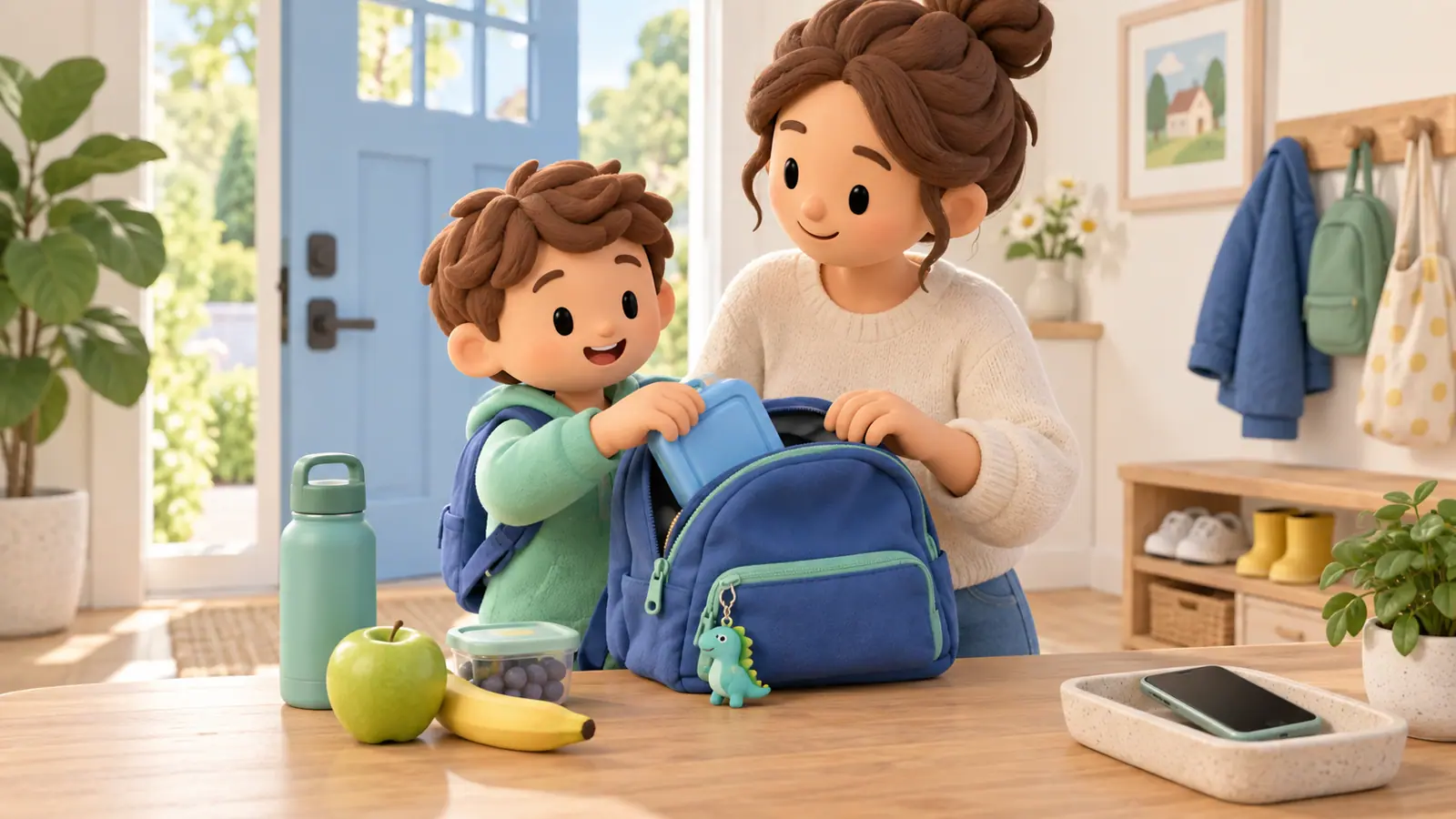
Screens before school become a practical problem when a session competes with breakfast, dressing, packing, or leaving on time. Begin with the departure time and work backward. Decide whether entertainment has a workable place in that morning, instead of bargaining over the phone after everyone is already late.
A school message, a transport update, and an entertainment feed are different uses. Your plan can preserve necessary access while giving optional viewing a clearer boundary.
Map one ordinary morning
Write the time the family must leave, then list the tasks that must be finished before it. Ask your child which parts they can manage and which need help. Include the adult's tasks too; a child's finished checklist cannot make a delayed caregiver ready.
Notice where devices enter the sequence. Is a video running while shoes are still missing? Is the child waiting for a ride after everything is ready? Those situations may need different decisions.
Two workable patterns
| Morning pattern | Possible arrangement | What needs checking |
|---|---|---|
| There is very little spare time | Entertainment starts after school; essential phone functions remain available | The child has another way to check necessary information |
| There is a predictable waiting period | One bounded activity after preparation is complete | It can end before departure without an unfinished live session |
These are examples, not recommendations for a fixed number of minutes. A family can choose the simpler pattern even if another family has a different rule.
Define “ready” visibly
Replace “when everything is done” with a short list: dressed, breakfast finished, bag packed, and shoes in the agreed place. Adjust it to the child's age and support needs.
Avoid adding a surprise chore after the child meets the list. If you forgot a necessary step, handle it and revise tomorrow's list openly.
For the entertainment activity, choose something with a clear end. A live multiplayer round or a continuous feed may not fit a short, uncertain waiting window. The child should know the endpoint before starting.
Use a departure cue that survives a busy adult
Give a clear cue before the final transition: “At the next alarm, the tablet goes on the shelf and we leave.” Rehearse what putting it away means, including where it stays and who carries it if it travels to school.
If the adult's own delay extends the wait, explain the exception. Do not quietly reopen an unlimited session and then blame the child for being surprised by the next stop.
Review the morning, not the child's character
After several ordinary school days, ask three questions: Did we leave when we needed to? Which task kept getting stuck? Was the screen plan clear enough to follow?
If the plan repeatedly fails, remove a decision or change the sequence. “Screens only after school this week while we settle the morning” is clearer than a different negotiation every day.
Do not block access to communication, transport, or accessibility tools that the child needs. Test actual exceptions using our school apps and contacts guide, then record the simple morning rule in your family media plan.
Sources
We identify organizations and evidence types so readers can evaluate each claim. See our editorial policy.
- school apps and contacts guide — OMO Kids Editorial Team. Editorial guide.
- family media plan — OMO Kids Editorial Team. Editorial guide.