Learning
A Summer Learning Plan Without Daily Worksheets
Create a flexible summer learning plan around books, practical math, and a small project. Includes a sample week and ways to adapt around camps and travel.
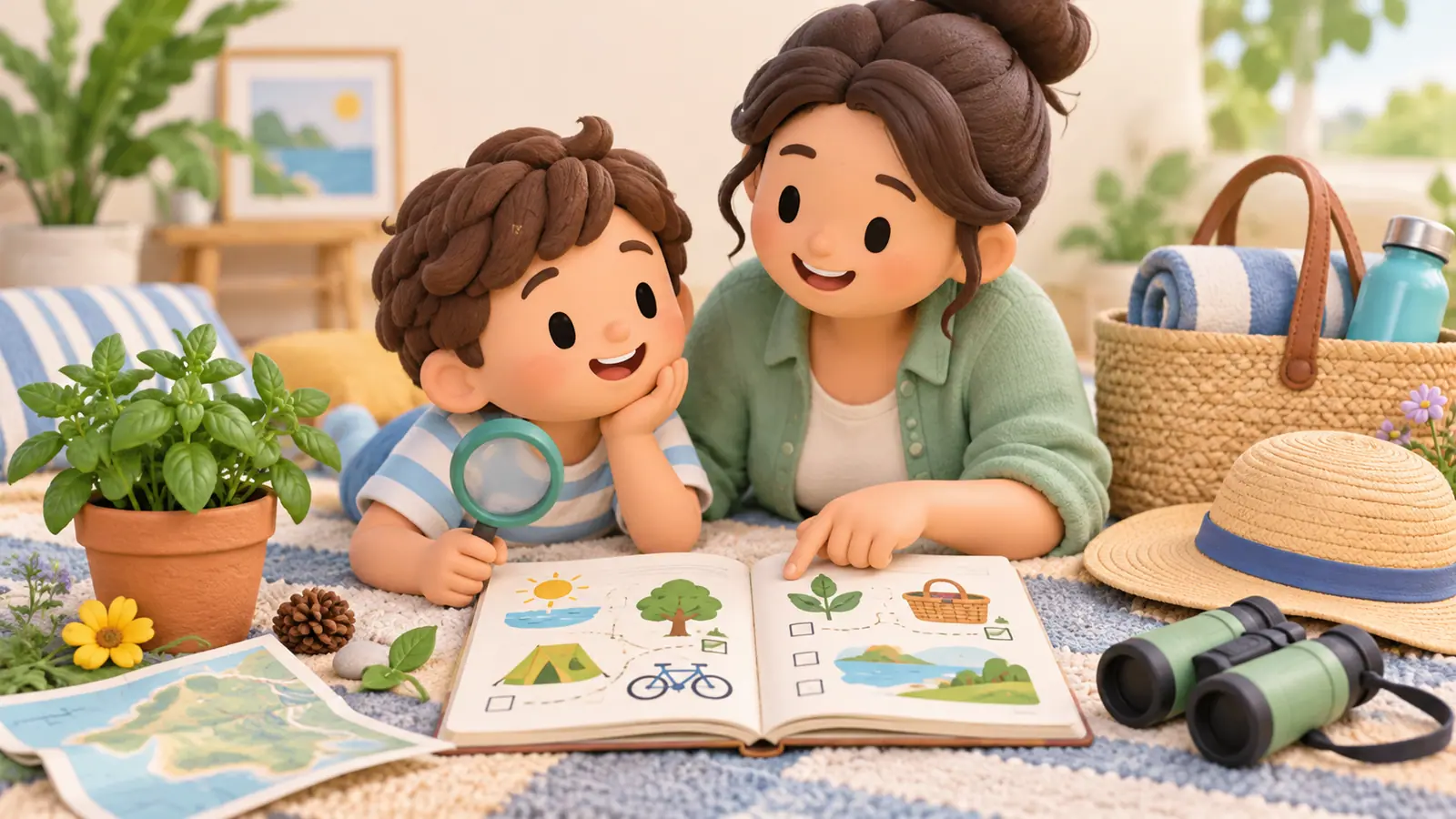
A summer learning plan can give the week a few useful anchors without reproducing a school day at home. Choose something to read, a practical problem to solve, and a small project the child cares about. Leave room for rest, friends, camps, and ordinary unplanned time.
This is a family planning example, not a promise to prevent a specific amount of learning loss. If the school recommends targeted support, build that into the plan separately.
Choose three anchors
Reading: Select a book, comic, factual text, or shared read-aloud that the child wants to return to. Decide when the materials will be available, rather than setting an ambitious page target first.
Practical math: Choose a real use for a familiar skill, such as measuring a shelf, comparing recipe quantities, or estimating a shopping total with an adult.
A project: Make something with a finish line: a paper map, a short illustrated story, a model, or a private photo sequence. A project should be small enough to complete with the available support.
A sample week
| Day or occasion | Learning anchor | Possible endpoint |
|---|---|---|
| Quiet morning | Read together | One chapter or a few pages |
| Shopping preparation | Estimate two item prices | Compare the estimate with the receipt later |
| Free afternoon | Plan a paper neighborhood | Draw and label five places |
| Another short session | Revisit a familiar school skill | Two examples and one explanation |
| End of week | Show the project | Explain one choice and one change |
The activities do not need to happen on consecutive days. A busy camp week might contain only the reading anchor. A travel week might use a short conversation about a map.
Start with materials you already have
Look at library access, paper, household measuring tools, and the child's existing books before buying a program. For online materials, check the source, content, costs, and account requirements. A summer plan should not depend on a chain of subscriptions nobody intends to maintain.
If a child wants a digital project, define what they will make and how they will save it. Time in a creation app and time browsing for inspiration can drift together unless the task is clear.
Keep optional practice separate from punishment
Do not add worksheets because a child had a difficult day or asked for a game. Explain any learning-before-entertainment arrangement in advance and keep the requirement stable.
If a task repeatedly becomes a struggle, check whether it is too hard, too long, or poorly timed. Reducing the task can be more useful than negotiating for an hour over finishing it.
Make the return to school concrete
Near the end of the break, check the school's actual instructions, supplies, and upcoming schedule. Review an unfinished required assignment early enough to ask for help. Avoid inventing extra preparation based on fear that every other child is doing more.
A useful summer record can be a few completed pieces and notes about what the child enjoyed or found difficult. It does not need daily scores.
For weeks away, use our travel plan. For changing days at home, the flexible weekend guide offers a way to protect important commitments while allowing the rest of the schedule to vary.
Sources
We identify organizations and evidence types so readers can evaluate each claim. See our editorial policy.
- travel plan — OMO Kids Editorial Team. Editorial guide.
- flexible weekend guide — OMO Kids Editorial Team. Editorial guide.