Learning
Spaced Practice for Kids: Build a Small Weekly Review Plan
Create a manageable spaced practice plan that revisits learning across days. Includes a sample week, adjustment rules, and a simple review record.
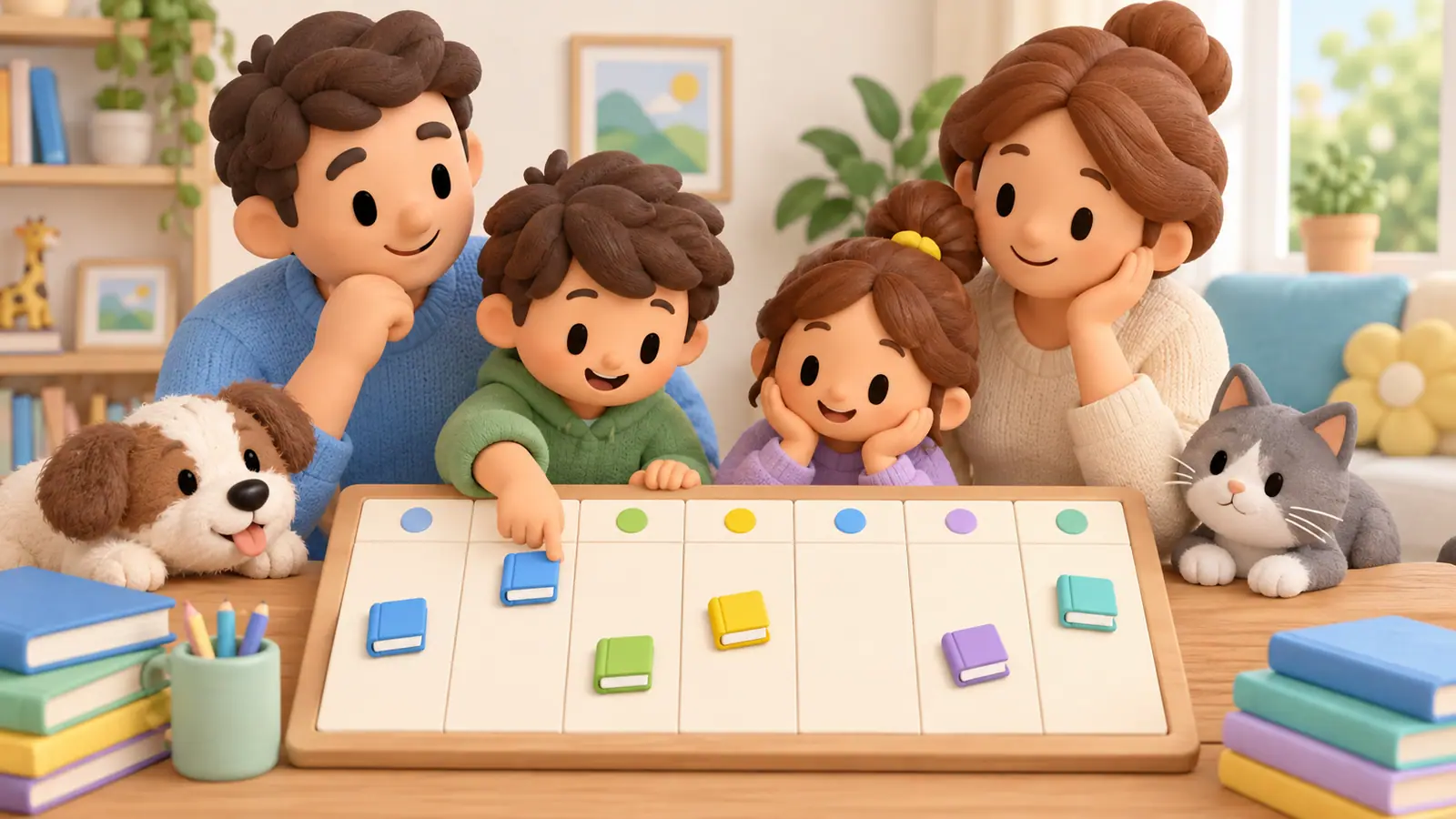
Spaced practice means returning to learning on separate occasions instead of doing all the practice in one long sitting. You can use a small paper calendar to plan it. Start with one skill or a few facts, not an attempt to schedule every school subject.
IES instruction and study guidance recommends spacing learning over time. It does not prescribe one perfect home schedule for every child, subject, or assessment date. The example below is a starting arrangement to adapt.
Choose a narrow target
“Review mathematics” is too broad. “Explain and compare halves and quarters” gives you something observable. Check that the material has already been introduced, and use the teacher's examples when available.
Write two or three prompts. For fractions, these could be: draw one-half, place three-quarters on a number line, and explain why two-quarters equals one-half. You do not need a new worksheet for each day.
An illustrative week
| Day | Activity | What to notice |
|---|---|---|
| Monday | Discuss one worked example and try one similar problem | Whether the idea makes sense with support |
| Wednesday | Attempt two questions before looking back | What can be recalled after a gap |
| Friday | Use the same idea in a different picture or situation | Whether it transfers beyond one format |
| Following week | Revisit one question and decide what still needs attention | Whether the next review should be easier, later, or more supported |
These days are not a required formula. If Wednesday becomes impossible, move the review. Do not pile missed sessions into a long punishment block on Friday.
Keep a record that helps you decide
Use three columns: prompt, help needed, and next step. For example:
“Place 3/4 on a line; needed equal intervals drawn; revisit with a partly prepared line.”
That record is more informative than “bad at fractions.” It also avoids treating an app streak as the main goal. A streak measures continuity of an activity, not necessarily understanding.
Change the interval when the work tells you to
If your child cannot begin, shorten the task and reteach the missing part. If they explain it comfortably on a later day, you can leave a longer gap or move to a related application. You do not need an algorithm to make a sensible adjustment.
Be careful with apparent improvement from repeating an identical question. “The answer to this card is six” is not the same as knowing why six is correct. Alter a number, picture, or context while keeping the skill recognizable.
Fit review around the actual week
Choose an existing calm moment rather than adding a demanding session after every activity. Practice should leave room for the child's assigned work, rest, and other needs. Some weeks may contain one useful review instead of three.
For a test, ask the teacher what content matters and plan backward from the date. Do not sacrifice sleep to preserve the schedule or promise that a fixed number of reviews guarantees a result.
Our after-school routine guide can help you find a workable place for practice. If a review is part of learning before gaming, agree on the small endpoint before starting and keep the entertainment boundary separate.
Sources
We identify organizations and evidence types so readers can evaluate each claim. See our editorial policy.
- instruction and study guidance — Institute of Education Sciences. Source guidance.